
“Minty Marbelicious” Tutorial – Cold Process Soap Swirl
Coconut Oil – 270g
Olive Oil – 400g
Palm Oil – 100g
Sunflower Oil – 150g
Shea Butter – 80g
Sodium Hydroxide (Lye) – 137g
Distilled/deionized water – 330g
Colours and pigments –
Tools – A Slab mould and a swirling comb
Safety – Please note : this tutorial assumes that you are proficient and experienced in cold process soap making. Please do not attempt if you do not have sufficient experience in making cold process soap.
Step 1
Slowly add the sodium hydroxide to the water. Be careful to avoid splashes. Stir in the lye until it is fully dissolved and make sure to seal it properly in a leak proof container. Set aside to cool to room temperature.
Step 2
Melt your solid oils and butter and then add your liquid oils and allow to cool to room temperature.
Step 3
Once the lye and the oils are sufficiently cool add the lye to the oil. Mix them together with a stick blender until you rich very thin trace or just traced.
Step 4
Divide the soap batter into 500g for the white soap. Add 3g of titanium dioxide to approximately 1-2 tablespoons of distilled water. Then add the titanium dioxide dispersion to the 500g of soap batter and stick blend just enough to mix the titanium dioxide with the soap but not too much to accelerate trace.
Divide the remaining soap batter into 4 x 250g cups/jugs and add the following
1.8g of Rock Star Red Synthetic Mica Powder
1.8g of Cherry Red Mica Powder
1.5g of Forest Gold Mica Powder
1.5g of Shimmer Pink Mica Powder with a little titanium dioxide to lighten the colour slightly
Use a small paint mixer to fully incorporate the mica into the soap. Using a small paint mixer will reduce the chances of accelerating trace.
Step 5
If you are using a fragrance or essential oil you can add it at this stage and stir/mix in thoroughly.
Step 6
Check that your soap has reached thin trace and pour it into your squeezy bottles ready for pouring.
Step 7
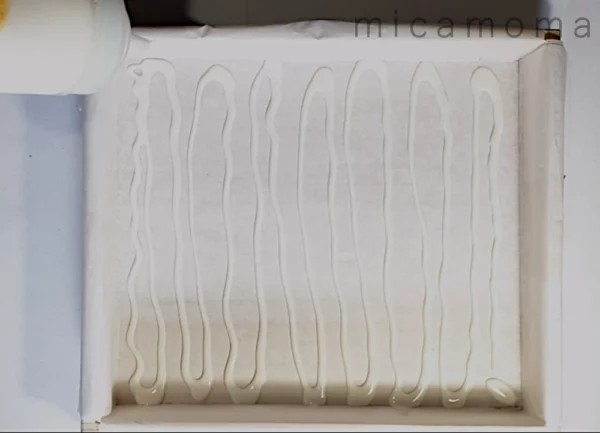
Start pouring your white lines into the bottom of your mould as shown until you have covered the entire mould in one pass.
Step 8
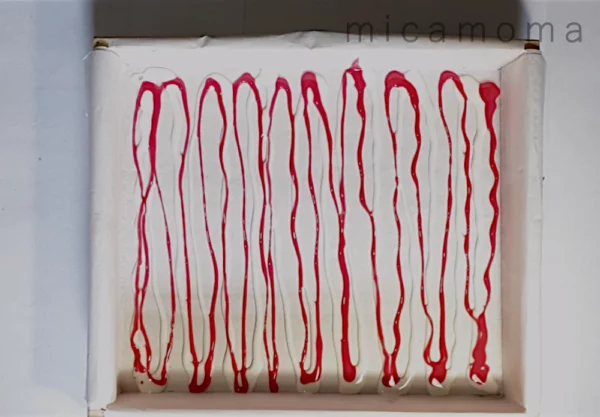
Repeat with all of the colours
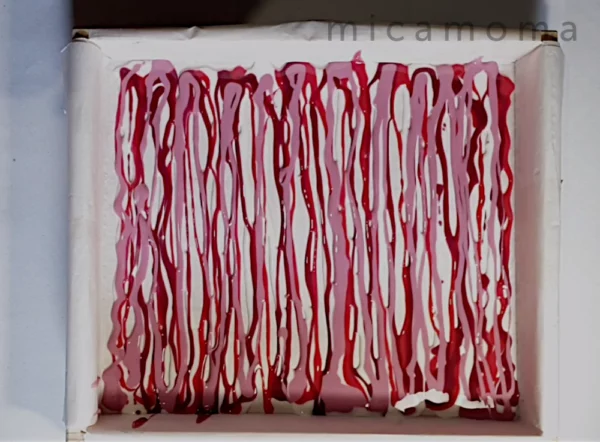
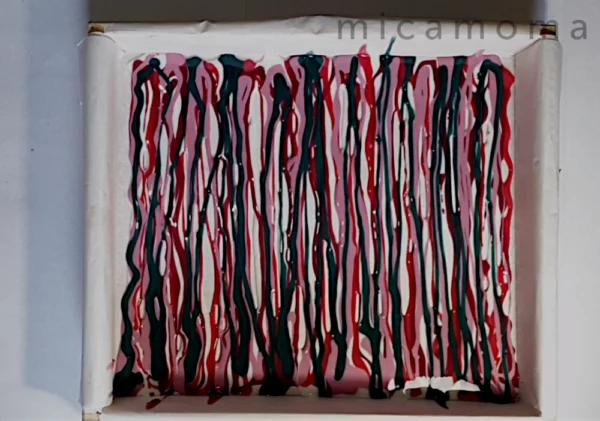
Step 9
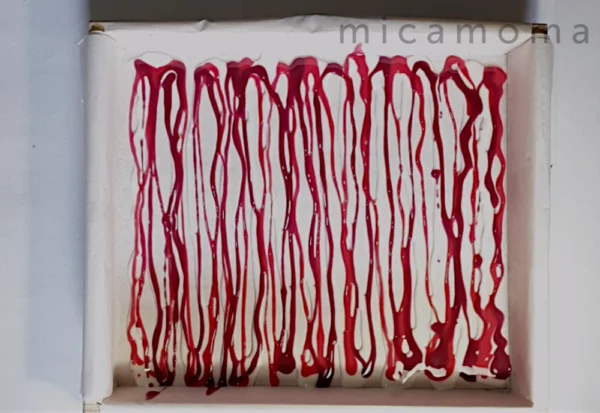
Keep pouring alternating lines until you have filled the entire mould. Make sure that you leave enough of each colour for the final pour so that you will include all of the colours on the surface.
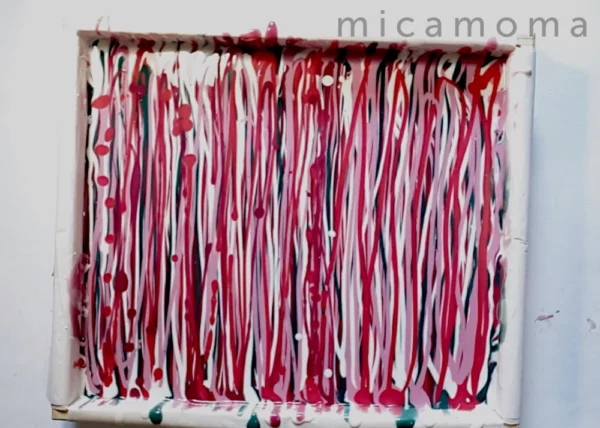
Step 10
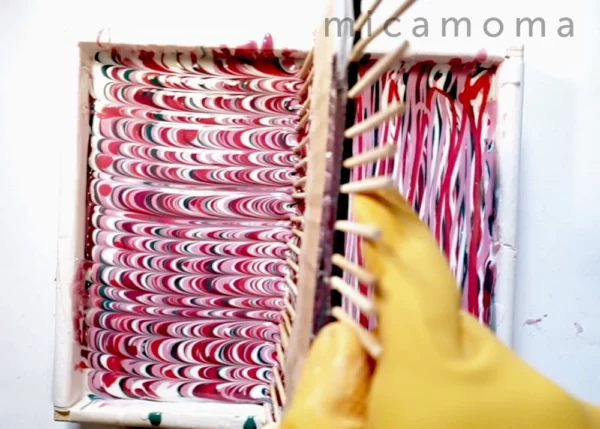
Now for the fun part. Place your swirling comb into the soap at either the left or right hand side of your mould.
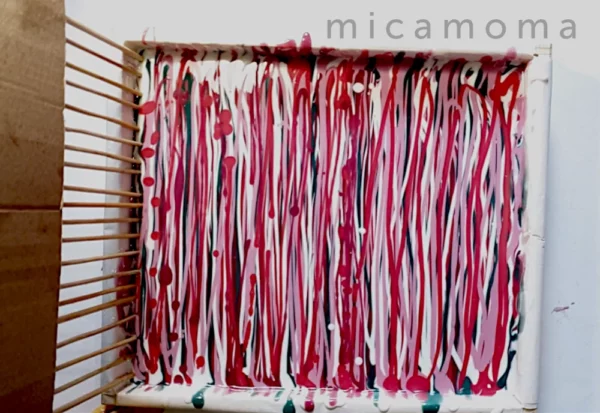
Step 11
Now drag your comb from one side of the mould to the other and watch the magic happen.
Step 12
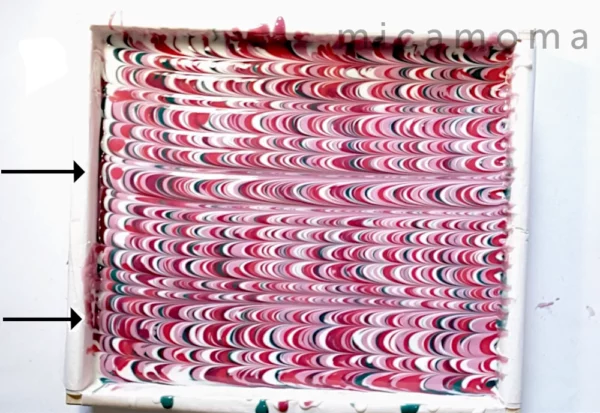
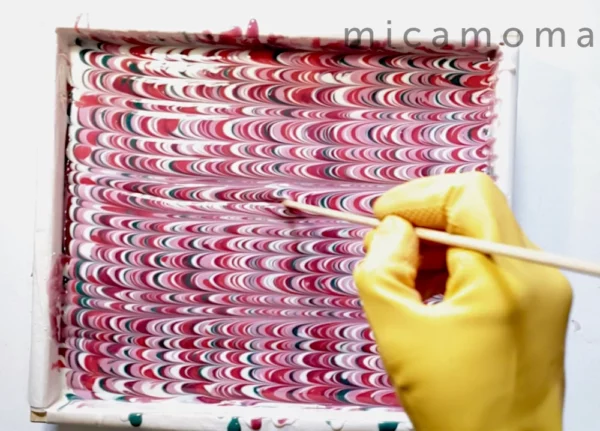
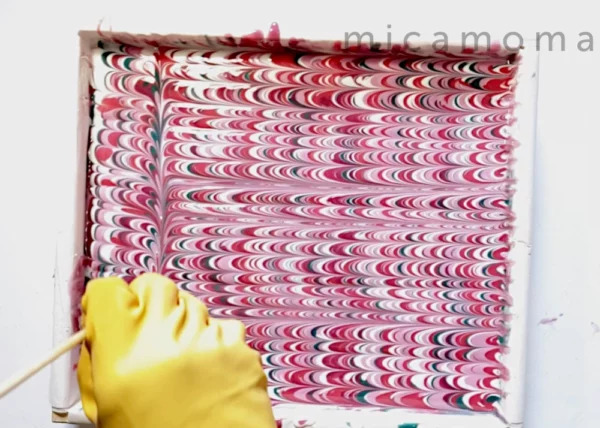
If you have larger patterned areas compared to others as indicated by the arrows you can simply take a stick and drag a line through the middle of that area as shown until you are satisfied.
Step 13
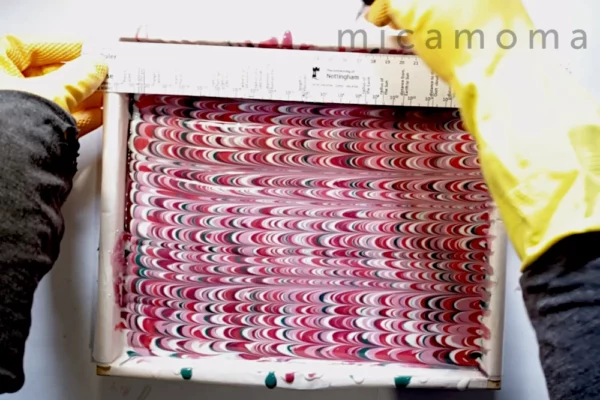
Once you are happy take a ruler and mark 4cm intervals across the edge of your mould. This will help you space the lines for the next part of your swirl.
Step 14
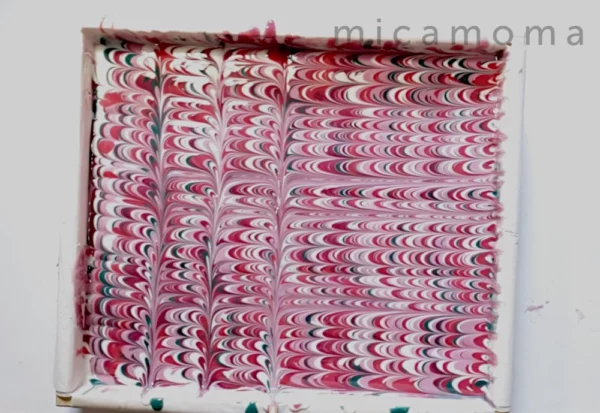
Take a stick and drag a line through your soap from the top to the bottom of your mould at each 4cm interval.
Step 15
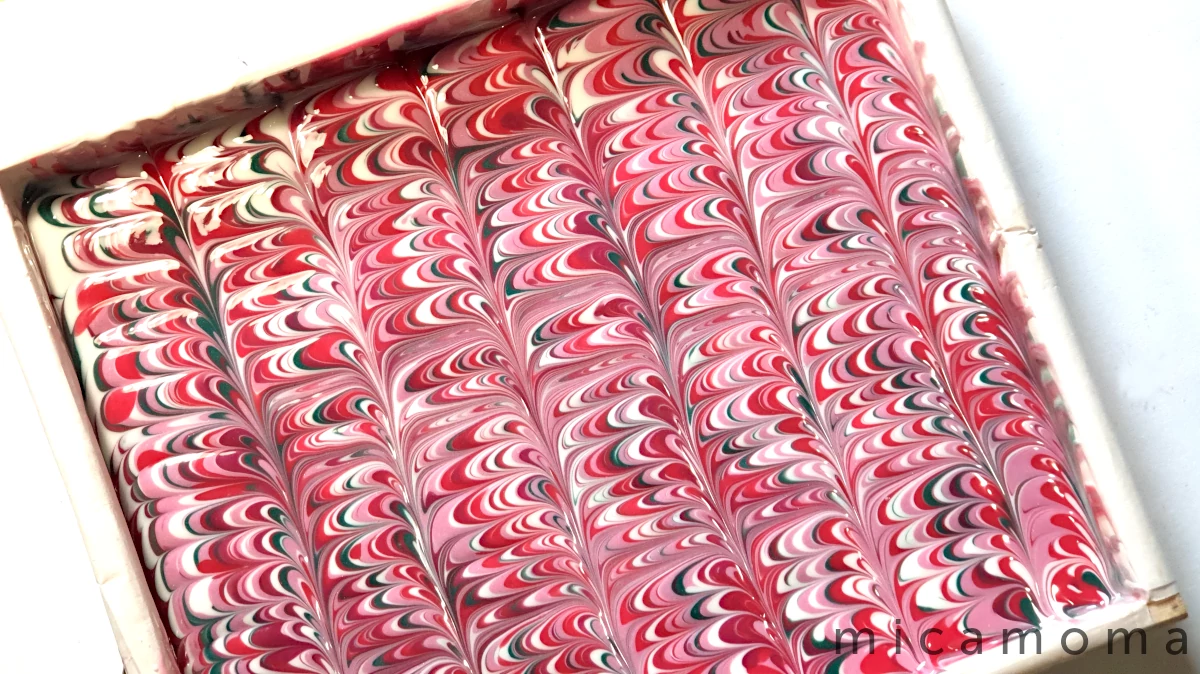
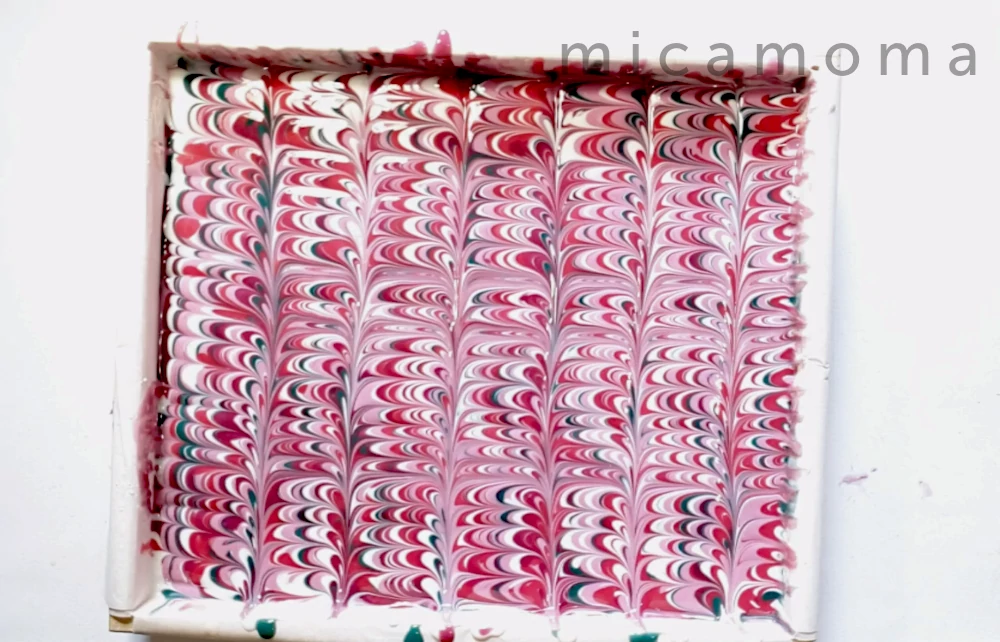
You should end up with something like this.
Step 16
Cover your soap and let it set using your preferred method. Gelling your soap will help the colours and the pattern to stand out even more.
Thanks so much for tuning in 🙂
To view our selection of mica powders for soap. Click here –>